
Why Sydney Shopping Centres Are Turning to Live Entertainment (And Why It Works)
Walk through almost any major shopping centre in Sydney these days and you’ll notice something: the centres doing the best job of getting people through the door aren’t just relying on retail. They’re creating moments. A stilt walker weaving through the food court. A pop-up circus workshop in the atrium. A shop window that turns out to be a live performance in disguise.
It’s not a coincidence. As online shopping keeps chipping away at foot traffic, centre managers and marketing teams are having to answer a harder question than “what’s on sale this week?” They’re asking: why should someone leave the house at all?
Live entertainment is one of the clearest answers — and it’s exactly what we focus on with our shopping centre entertainment in Sydney.
Online Shopping Can’t Compete With a Live Moment
You can buy almost anything from your couch. What you can’t do from your couch is watch your kid learn to spin a plate for the first time, gasp as a “mannequin” in a shop window suddenly winks at you, or gather with a crowd of strangers who are all laughing at the same joke.
That’s the gap physical retail spaces can own — if they use it. A shopping centre that offers genuine, unexpected experiences gives people a reason to visit that has nothing to do with needing a new pair of shoes. And once they’re there, browsing (and spending) tends to follow naturally.
It Doesn’t Have to Live on a Stage
One of the most interesting shifts in shopping centre entertainment is the move away from the traditional “stage in the middle of the mall” format. Roving performers, interactive workshops, and entertainment woven directly into the retail environment tend to create far stronger engagement, simply because people encounter it rather than seek it out.
Take the idea of a shop window activation. Instead of announcing that something is happening, performers pose as still mannequins inside a storefront display. Shoppers walk past without a second glance — until one of the “mannequins” moves. Suddenly phones are out, people are slowing down, a small crowd forms, and what started as a quiet retail display becomes the most talked-about thing in the centre that day. It’s a great example of roving entertainment that doesn’t just happen near a retailer — it makes the retailer part of the show. You can see more of this kind of work, and the reactions it gets, over in our gallery.

School Holidays Are the Obvious Opportunity (But Not the Only One)
School holidays are prime time for shopping centre entertainment, and for good reason — parents are actively looking for things to fill the day, and a centre that offers circus workshops, roving characters or a live family show suddenly becomes a destination rather than a chore.
But treating entertainment as a school-holidays-only tactic leaves a lot on the table. Christmas, Halloween, Lunar New Year, late-night shopping events, grand openings, community days — every one of these is an opportunity to give a centre a different energy and give shoppers a reason to come back rather than treating every visit the same. A late-night shopping event, for instance, can call for a slightly different tone than a daytime family activation — something closer to our adult circus entertainment, and a grand opening or centre relaunch shares a lot in common with the energy we bring to open day entertainment.
What Makes an Activation Actually Work
Not all “entertainment” moves the needle equally. The activations that create real buzz — the kind people photograph, share and talk about — tend to share a few things in common:
- They’re interactive, not just watchable. A juggler is fun to watch. A juggling workshop where a child gets to try it themselves, with a parent cheering them on, is something a family remembers.
- They respond to the space. A roving stilt walker weaving between shopfronts creates a different feeling than the same act stuck on a stage in a corner nobody walks past.
- They surprise people. The best reactions come from entertainment shoppers didn’t see coming — a window display that turns out to be alive, a character who appears where you least expect one.
- They’re designed around a goal, not just booked because “we need something for the holidays.” Whether the aim is driving traffic to a specific precinct, supporting a retailer, or building a centre’s family-friendly reputation, the format should follow the objective — the same thinking we bring to corporate event entertainment, where the brief drives the act rather than the other way around.
What Makes an Activation Actually Work
Ultimately, shopping centres are competing for something online retail simply cannot offer: a shared, physical experience. Entertainment — done well — is one of the most direct ways to deliver that. It turns a transactional trip into something worth talking about at dinner, worth posting about, and worth coming back for.
The centres getting this right aren’t necessarily spending more. They’re thinking about entertainment less as decoration and more as part of the experience they’re actually selling.
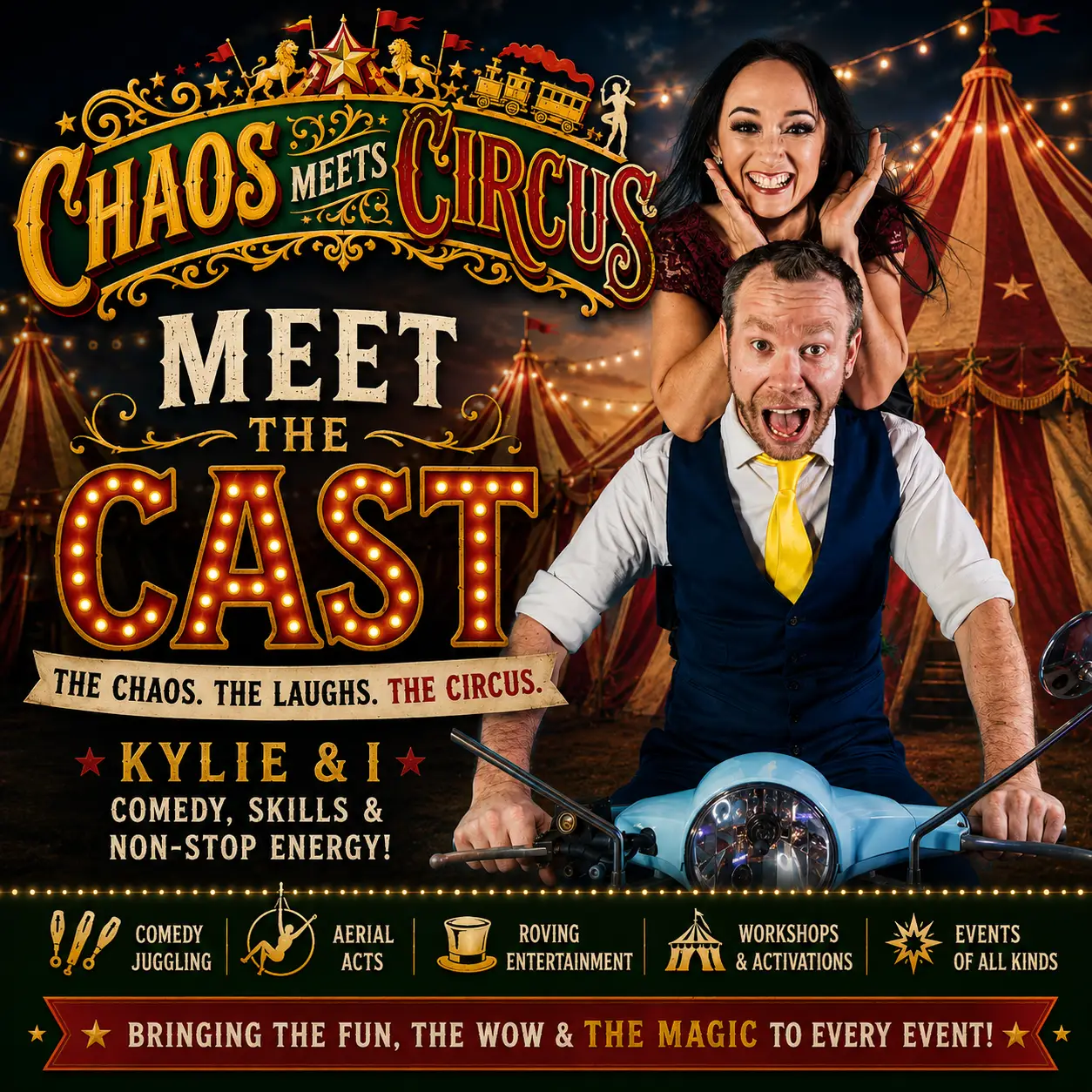
Looking to bring circus-style entertainment, roving performers or an interactive activation to your centre? Explore our shopping centre entertainment options or get in touch to talk through what could work for your space. You can also browse more ideas over on the blog.